
3D Panel Fence or 2D Double Panel Fence? How to Choose Between Them
The 3D panel gets its strength from V-bends, the 2D double panel from paired horizontal wires. We compare construction, wire, weight, height and typical uses.
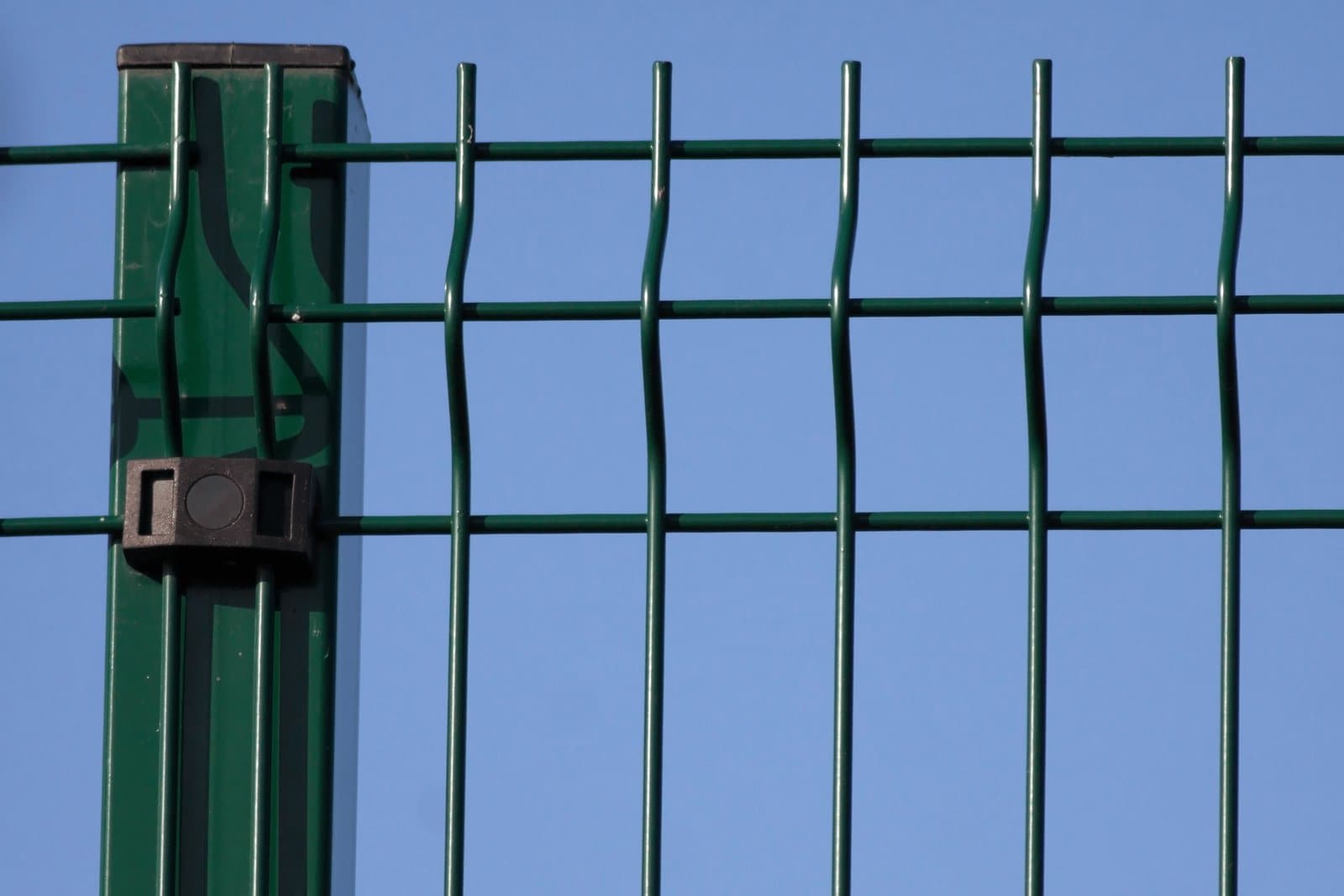
When you specify a welded mesh fence, the decision usually comes down to two panels: the 3D panel with V-bends and the 2D double wire panel. Both are made from the same galvanised steel wire and finished with the same powder coating, so the difference between them is not quality. It is structure. Structure decides how heavy a panel is, how tall it can reasonably go and which sites it suits best. This guide compares the two on the points that matter when you are writing a specification or placing an order.
Where the strength comes from
The 3D panel fence is built from single vertical and horizontal wires welded at every crossing point. V-shaped bends are pressed horizontally across the full width of the panel, and these bends are what keep it from flexing. Taller panels get more of them: in our range, low panels have two bends, mid-height panels three and tall panels four.
The 2D Double Panel Fence, widely known as twin wire mesh, is completely flat. Every horizontal row is made of two parallel wires with the vertical wire held between them and welded in place. Its stiffness comes from this double-wire construction and from heavier wire gauges, not from its shape.
Wire diameter and weight
The most tangible difference between the two is the amount of steel they contain.
- 3D panel: Our standard 3D panels use wire between 4 and 5 mm, supplied in 4×4, 4.5×4.5, 4×5 and 5×5 mm combinations.
- 2D double panel: Produced in two combinations, 6/5/6 and 8/6/8 mm. The first and last figures are the two horizontal wires, the middle figure is the vertical wire.
The weight of a wire rises with the square of its diameter rather than in step with it. A metre of 8 mm wire therefore holds more than two and a half times the steel of a metre of 5 mm wire. Add a second horizontal wire to every row and a 2D double panel ends up considerably heavier than a 3D panel of the same size. For project buyers that difference shows up twice: steel content is one of the main factors in price, and heavier panels mean heavier loads to ship and to handle on site.
Height
We manufacture 2D double panels from 630 mm to 3030 mm in 200 mm steps. The taller a fence becomes, the more resistance to bending each panel needs, and the thick paired horizontal wires provide exactly that. At garden and residential heights, the V-bends of a 3D panel give it enough rigidity while using noticeably less steel.
Appearance
The bends of a 3D panel create horizontal lines along the length of the fence, a look that sits comfortably with gardens and planting. A 2D double panel has a flat face and clean vertical lines, which gives it a more architectural character. It is a frequent choice for modern façades, factory frontages and the entrances of public institutions.
Which panel for which project?
3D panel fence
- Private gardens, villas and residential estates
- Plot, field and farm boundaries
- School grounds, parks and green spaces
- Long perimeter runs where budget matters. The lighter panel is easier to transport and install, and the overall cost usually stays lower.
2D Double Panel Fence
- Factories, warehouses, logistics centres and industrial zones
- Public buildings and sites where security comes first
- Sports grounds exposed to ball impact (for complete sports enclosures we also offer our Sports Facility Clamp-Fit Fence)
- Fences taller than about 2 metres
- Architectural projects that call for a flat, understated look
When climbing is the main risk
Neither panel is designed to stop climbers, because the horizontal wires on both can serve as footholds. Where climbing is a genuine threat, the right product is our High Security Fence. Its 76.2 × 12.7 mm apertures, known as 358 mesh, leave fingers and toes nothing to grip. Adding razor wire or barbed wire along the top of an existing panel line is another widely used measure.
What both panels share
- Coating: The wire is galvanised first, then given a nano coating and an oven-cured electrostatic polyester powder coat. Both panels receive the same protective layers.
- Colours: Black, anthracite and green are standard. Custom RAL colours are available on request.
- Panel width: The standard panel width is 2500 mm.
- Posts: Both panels can be clipped to our box section posts. For the 2D double panel, a rectangular post with flat bar fixing is also available.
- Replacement: A damaged panel can be removed and replaced without disturbing the panels or posts next to it.
- Certification: Our panel fences carry CE marking under EN 10223-4, and our production is certified to ISO 9001, ISO 14001 and ISO 45001.
Side-by-side comparison
| 3D Panel Fence | 2D Double Panel Fence | |
|---|---|---|
| Construction | Single wires with horizontal V-bends | Paired horizontal wires, no bends |
| Wire diameter | 4–5 mm | 6/5/6 or 8/6/8 mm |
| Weight | Lighter | Considerably heavier |
| Appearance | Horizontal lines, suits planted areas | Flat, clean, architectural |
| Best suited to | Homes, gardens, long boundary runs | Industry, public sites, sports grounds, tall fences |
| Cost | Usually more economical | Higher, due to greater steel content |
Four questions that settle the choice
- How tall does the fence need to be?
- What is it protecting: a garden or a facility?
- Is there a risk of impact from vehicles, forklifts or balls?
- How long is the fence line, and how fixed is the budget?
Konak Tel Çit manufactures both panels in Aksaray, Turkey, with an annual production capacity of 60,000 tonnes. Technical details are on the 3D Panel Fence and 2D Double Panel Fence pages, and size tables for our whole range are in the E-Catalog. Send us the fence height, total length, destination country and intended use through the quote form, and we will recommend the right panel for your project.